

Keynote Speakers

Prof. Sotirios Grammatikos
ASEMlab – Laboratory of Advanced and Sustainable Engineering Materials & NTNU - Norwegian University of Science and Technology, Norway
Keynote Title:
Durability and lifetime prediction of polymer composites
A short description of this speech will be provided soon.
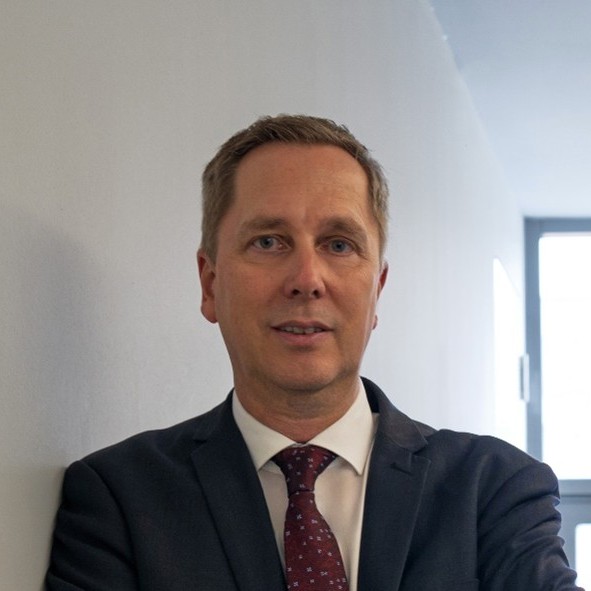
Prof. Maik Gude
TU Dresden, Germany
Keynote Title:
Developments and challenges in failure analysis of multi material light weight structures

Prof. Katarína Monková
Technical University of Kosice, Slovakia
Keynote Title:
Exploiting physical laws and principles to design against failure in additive technologies and porous cellular structures applications

Prof. Keke Tang
Tongji University, China
Keynote Title:
Towards PINN-Assisted Fracture Analysis of Engineering Materials
keynote lecture in memory of Professor George C. Sih
A short description of this speech will be provided soon.

Prof. Anna Zervaki
National Technical University of Athens, Greece
Keynote Title:
Materials for Liquid Hydrogen Storage and Transportation: Current status and future challenges
Short description of this speech: Hydrogen (H₂) is emerging as a key energy carrier for low-emission energy systems, yet its storage and transportation in liquid form (~20 K, −253 °C) imposes stringent demands on materials and system design. Liquid hydrogen (LH₂) cargo containment systems in maritime applications require alloys capable of resisting hydrogen-induced degradation, including atomic hydrogen ingress, hydrogen-assisted cracking, phase transformations, and cryogenic embrittlement, particularly in welded and corrugated stainless-steel structures. Equally critical is the design of thermal insulation systems, which must minimize cryogenic heat flux to limit the boil-off rate (BOR) and ensure safe, efficient long-duration storage. Addressing these technical constraints requires targeted research, engineering solutions, and strategic investment to enable the safe, scalable deployment of LH₂ in maritime transport, supporting the transition to a sustainable low-carbon energy future. The lecture highlights recent results from the Shipbuilding Technology Laboratory of the National Technical University of Athens (STL/NTUA) within the HORIZON Projects LH2CRAFT and NICOLHy, focusing on materials performance for cryogenic hydrogen containment tanks and advanced insulation technologies for next-generation maritime applications.